The Last Time Everyone Thought Hollywood Was Finished
I remember a hot summer afternoon in the 1970s.
I was a teenager in Hollywood, Florida, heading into my local movie theater when I noticed something unusual in the lobby.
There was a large sign urging patrons to sign a petition.
The message was urgent.
Movies were about to start appearing on cable television.
If we didn’t act now, we were warned, movie theaters could disappear forever.
The implication was clear:
Sign immediately—or say goodbye to the magic of movie theatres.
I don’t remember whether I signed the petition.
What I do remember is the fear.
The certainty.
The conviction that a new technology was about to destroy an entire industry.
Soon after, HBO arrived.
Then VHS.
Then DVDs.
Then streaming.
And now, AI.
Once again, Hollywood is bracing itself for what many believe could be an existential threat.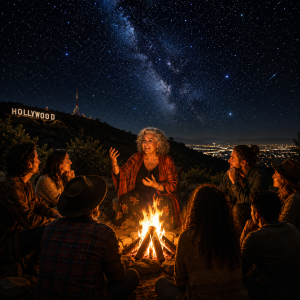
And this time, the concerns aren’t imaginary.
Some writers are already being replaced.
Some actors are already seeing their likenesses replicated.
Studios are experimenting with AI-generated content.
Entire business models are being challenged.
Unlike the cable-TV panic of my youth, this disruption isn’t theoretical.
It’s happening.
Which raises a fair question:
Is this the beginning of the end?
Maybe.
Or maybe it’s the beginning of another reinvention.
Because that afternoon in the movie theater lobby keeps coming back to me.
The people collecting those signatures weren’t crazy.
They correctly sensed that technology was about to transform their industry.
What they got wrong was assuming that transformation and extinction were the same thing.
They aren’t.
Movie theaters survived.
Not unchanged.
Not untouched.
But they survived.
And I wonder if the same may ultimately prove true for Hollywood today.
Because while technology can generate content, humans still hunger for meaning.
Technology can create images, voices, music, and scripts.
But the stories that stay with us forever usually contain something harder to manufacture:
A soul.
A point of view.
A lived experience.
A heartbreak.
A truth.
The kinds of things that emerge from being gloriously, messily human.
Every generation seems convinced it is witnessing the technology that will finally destroy creativity.
Radio was supposed to kill live entertainment.
Television was supposed to kill radio.
Cable was supposed to kill movie theaters.
The internet was supposed to kill everything.
And yet here we are.
The tools keep changing.
The humans keep adapting.
What survives is the thing underneath it all:
Our hunger for stories.
Our need to laugh together, cry together, dream together, and make meaning out of this strange and beautiful human experience.
So yes, AI may replace some jobs.
It may eliminate entire categories of work.
It may force Hollywood to reinvent itself once again.
But history suggests that every time technology raises the bar, what becomes more valuable is not our ability to imitate humanity.
It’s our ability to embody it.
Because if there’s one thing I’ve learned since that summer afternoon in a movie theater lobby in Hollywood, Florida, it’s this:
The future rarely arrives by destroying everything that came before. More often, it arrives by forcing us to discover what is truly irreplaceable.
Love,
Arielle
“The more powerful our technology becomes, the more precious our humanity becomes.” ✨
P.S. I still smile thinking about the irony that this lesson began in Hollywood, Florida… and now, half a century later, Hollywood, California is having the very same conversation. Some things never change.









Leave a Reply
Want to join the discussion?Feel free to contribute!