My Brain and I have Plans!
Nearly 30 years ago, Brian and I traveled to Naples, Florida, to spend time with the woman often called the Godmother of the New Age, Ruth Montgomery.
While we were there, we met two of Ruth’s close friends: Dr. David Perlmutter and his wife, Leize.
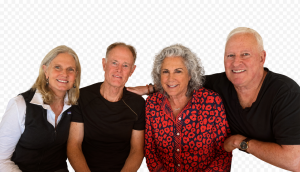
From the moment we walked into their home, it felt like a homecoming.
Do you know that feeling? When you meet someone for the first time, yet some part of you recognizes them?
That was David and Leize.
Even then, David was a highly respected neurologist and nutrition expert with ideas that were years ahead of their time. He was asking important questions about the relationship between the brain, the body, nutrition, and the way we live—questions that much of conventional medicine had not yet begun to explore.
His life’s work has centered on two of the most devastating neurological diseases of our time: Alzheimer’s and Parkinson’s.
In the years since we first met, David has written several bestselling books, created enormously successful PBS health specials, and helped millions of people understand that the choices we make every day can profoundly influence our health.
And now he has written what I believe may be his most important book yet.
It is called Brain Defenders.
At the center of the book is a remarkable—and genuinely hopeful—idea: Our cognitive future is not necessarily predetermined.
David introduces us to the brain’s own immune system and, in particular, to microglia—the specialized immune cells that act as its guardians. Scientists are discovering that these tiny cells may play a far greater role in Alzheimer’s disease and other forms of neurodegeneration than we once understood.
When microglia are functioning well, they help protect, repair, and maintain the brain. But when they become chronically activated or impaired, they may contribute to the inflammation and damage associated with cognitive decline.
This is where David’s work becomes so empowering.
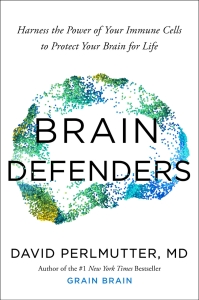
Brain Defenders explores the intimate connections among metabolism, inflammation, the immune system, and the brain—and shows us why brain health is about so much more than the brain alone.
It also reminds us that the way we live matters.
What we eat.
How we move.
How we sleep.
How we manage stress.
How we care for the astonishing ecosystem of the body.
None of this means that every illness can be prevented or that we control everything that happens to us.
We don’t.
But it does mean that we are not powerless.
And that is the message I keep returning to: hope grounded in science.
After nearly three decades of friendship, I have watched David remain endlessly curious, deeply committed, and completely unwilling to accept that cognitive decline must simply be an inevitable part of aging.
This book is the culmination of so much of what he has spent his life studying.
I am enormously proud of my dear friend—and very excited to share Brain Defenders with you.
If you care about protecting your brain, living a longer and healthier life, or understanding where the future of Alzheimer’s research may be headed, I hope you will read it.
You can learn more and order your copy here.
With love,
Arielle










Leave a Reply
Want to join the discussion?Feel free to contribute!